Guide to Saving Money on Your Internet Bill
Follow these insider tips to stop overpaying on your internet bill each month.

- Carefully review your monthly internet bill to understand all fees and avoid surprises, including activation fees, equipment rentals, and late-payment penalties.
- Evaluate your home’s internet usage and requirements to avoid overpaying for services you don’t use, considering factors such as speed, data allowance, and the number of connected devices.
- Research competitive internet service providers in your area, consider bundling services to save money, and hone your negotiation skills to reduce costs further.
Reliable internet has become an indispensable utility for households, serving as the gateway to communication, entertainment, work, and education. As demand for high-speed connectivity soars, however, so do the costs of internet packages, straining household budgets. Despite a decade of price stability, the average broadband plan still costs around $90/month, well above the $60 threshold considered affordable.
Fortunately, there are ways to ease the financial burden of high internet bills so you can keep a vital lifeline in the digital world without compromising financial stability. From negotiating with service providers to exploring alternative plans, this guide will provide the knowledge and tools necessary to save money on your internet bill.
Watch: Save Big on Your Internet Bill
Eager to learn our tips but don’t have time to read the whole article? We break down our best ways to save on your internet bill in this video.
Carefully Examine Your Monthly Internet Bill
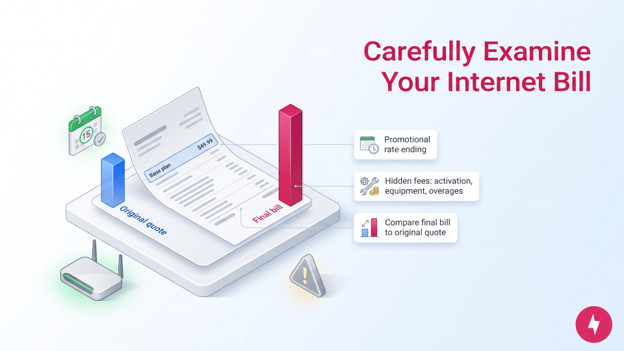
Internet service providers (ISPs) often offer a reasonable quote when you subscribe, but many subscribers see a significant increase in their monthly bills after the first year. That fee hike often comes from promotional rates expiring or hidden fees on your bill. These fees typically include activation fees, equipment rentals, and late-payment penalties. Some providers even charge for data overages.
Each ISP may have varying charges, but finding a provider that doesn’t add extra fees to its bills is rare. Activation fees, usually buried in the fine print, are one-time costs to start service, while equipment rentals charge for devices such as routers or modems. Overlooking payment due dates will result in penalties, increasing the gap between the original subscription price and the final bill. Understanding all aspects of your statement is essential to plan how to reduce your internet bill.
Evaluate Your Home’s Internet Usage and Needs
ISPs offer a range of packages to meet each household’s unique needs, so it’s essential to know exactly what you need. About 19% of Americans worry about paying their internet bill each month, so if you’re overpaying for services you’re not using, you could save a lot of money on your internet plan. When searching for the right plan, consider a few key factors: speed, data allowance, and support for multiple devices at once. Evaluate your personal usage patterns by considering the number of users, the type of online activities, and the devices connected. Our bandwidth calculator is a great way to self-check your household’s usage and necessities.
Despite the widespread availability of unlimited data plans, certain ISPs still implement data caps. That may not be ideal for certain types of users, but selecting a plan with a data cap could be a more cost-effective option for households that spend less time online and predominantly access low-data websites and apps.
Many ISPs provide tools to help users track their data usage, so you can monitor it closely to stay within limits and avoid potential overage fees. Even heavy data users can save by adjusting streaming quality on popular platforms like Spotify and Netflix, which can significantly reduce gigabytes per hour. Some ISPs also offer data bonus zones during off-peak hours, providing opportunities to use data without exceeding the monthly cap.
Opt for DIY Internet Needs When You Can
Using your own equipment and installing it yourself can be a smart financial decision that may save you money on up-front internet costs. Every internet service provider varies in its equipment and installation process. Some companies include the equipment for free, charge a one-time fee, or charge monthly rental fees. Some providers offer free installation, while others require a one-time fee.
For providers that charge for equipment, purchasing your own will certainly make a financial impact, especially where monthly rentals are concerned. For installation fees or one-time equipment fees, opting to DIY would reduce up-front costs, but it won’t make a difference on monthly bills. You must also consider the financial burden of investing in the equipment and the time it takes to install.
Research Competitive Internet Service Providers in Your Area
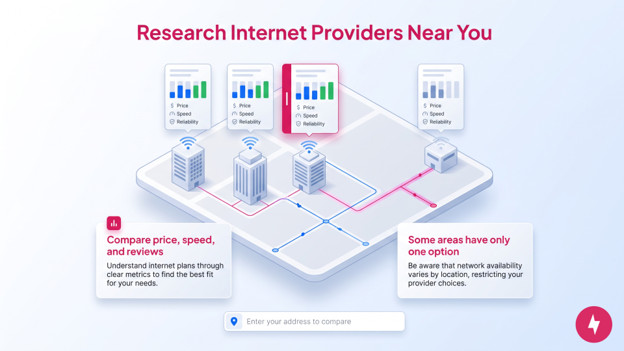
Up to 43% of adults with household incomes under $30,000 lack a home broadband subscription, but competitor research for internet services can be a savvy strategy to find the best internet deal in your area. By comparing ISPs, you can evaluate pricing, speed, reliability, and customer satisfaction to determine the best fit. Simply switching your internet provider may save you money each month.
To find the best option, focus on the factors that matter most to you, whether it’s price, speed, or other criteria. Online comparison tools, reviews from reputable sources, and community forums can offer unbiased insights into how different ISPs perform.
Some regions have fewer ISP options, which could limit your choices. In some cases, you may have only one viable internet option.
Determine What Bundle Options Work For You
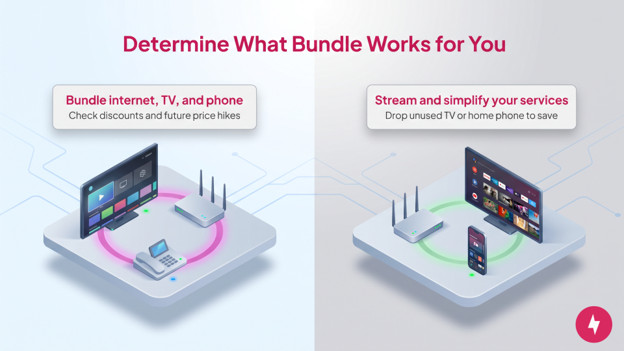
Bundling services such as TV and phone with your internet plan is a significant cost-saving method, but it only works if it makes sense for your personal use. If you’re already paying separately, explore the potential cost savings of bundling multiple services. Providers frequently offer internet discounts and promotional rates for bundled packages to take advantage of, but make sure to consider the promotional costs and how future price increases could change your monthly total.
On the flip side, if you already have a service bundle, assess whether your current bundle still makes sense for your household. With the rise of streaming services and alternative content delivery, cutting the cord is a feasible way to save money. Review your entertainment habits and decide whether you still need traditional cable TV. Streaming platforms often provide more flexible and cost-effective options. If you still have a home phone, it may be time to let it go in favor of a mobile device.
Consider Financial Assistance Programs
Government initiatives are in place to alleviate the financial burden of internet expenses for low-income families. One program is the Federal Communications Commission’s Lifeline program, which aims to make communication services, including broadband internet, more affordable for qualifying households. To qualify for Lifeline, individuals must participate in federal assistance programs such as Medicaid, SNAP, or SSI.
Beyond government assistance, many internet providers have their own low-income internet plans to help families who need discounts on internet services. You often have to apply for the plans directly through the provider, but not all internet providers have them. The Affordable Connectivity Program (ACP) has ended, but ACP scams are still common online, so stay alert for red flags related to ACP discounts.
To benefit from those types of initiatives, review the eligibility criteria outlined by each program. After confirming eligibility, applicants can apply through the program’s page and contact their internet service providers to inquire about participation in these government programs. This process typically involves completing an application form, providing required documentation, and working closely with the ISP to ensure smooth enrollment.
Learn the Art of Negotiation
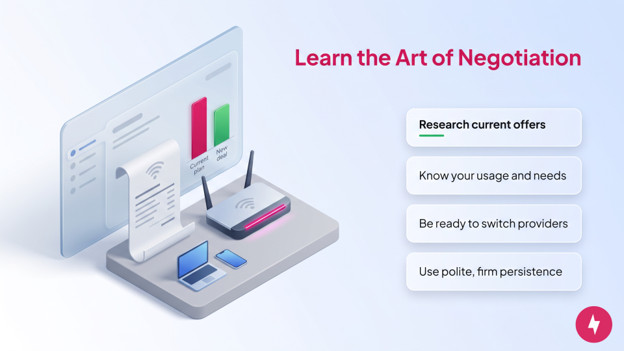
Most people don’t realize they can negotiate their internet plan. Luckily, it’s a viable strategy that can result in cost savings and improved services. Here are some tips to help you navigate the negotiation process.
- Research current offers. Familiarize yourself with the current promotions and offers provided by your ISP and consider the rates offered by competitors to bolster your negotiating stance.
- Understand your usage and needs. Are you repeatedly exceeding data limits? Do you need a faster connection for your activities? That assessment will enable you to suggest customizing a plan that better meets your needs.
- Be prepared to cancel. ISPs tend to be more open to negotiating when they perceive a risk of losing a customer. Communicate your discontent clearly and indicate your intention to explore alternative service providers.
- Polite persistence. It’s crucial to be both persistent and polite to negotiate effectively. Maintaining a respectful tone, clearly communicating your concerns, and expressing appreciation for being a valued customer are key to achieving your desired outcome.
Sample Script: Hello, [ISP representative’s name]. I hope you’re doing well. I’ve been a loyal customer for [X years], and I appreciate the service. However, I’ve recently come across some competitive offers from other providers and would like to know if any promotions or discounts are available for my current plan. I’ve been considering exploring different options, but I value the service I’ve received from [ISP]. Can we discuss ways to adjust my plan to better suit my needs and budget? Thank you for your assistance.
Frequently Asked Questions About Monthly Internet Savings
Why is my internet bill so high?
Several factors can cause a household’s internet bill to skyrocket. One main culprit is hidden fees, such as equipment rentals, service activation, or usage fees, that may not be immediately evident upon enrollment. Introductory promotional prices that end after an initial period can substantially increase your monthly bill. Bundled packages, although convenient, may also increase expenses if the combined options don’t match an individual’s specific requirements. Selecting a high-speed package or unnecessary add-ons can also drive up costs.
How much does the average person spend per month on internet?
U.S. households spend an average of $60 to $90 per month on internet access. The cost of internet varies greatly based on your location and the ISPs available in your area.
Is it cheaper to use data or Wi-Fi?
Determining the most cost-effective way to access the internet depends on your mobile or internet plan. Wi-Fi is typically more affordable for data-heavy activities, such as downloading large files or streaming videos, because it often comes with a fixed monthly cost or is included in your home internet plan.
On the other hand, cellular data can add charges, especially if you exceed your data limit. If you have a limited Wi-Fi plan or your home internet plan has data caps, using cellular data sparingly or seeking free Wi-Fi in public spaces may be more economical. Assess your usage patterns, plan limits, and associated costs to decide which option best fits your needs.
Do I need home internet if I have a smartphone?
A smartphone can provide internet access on the go, but whether you need home internet depends on your usage requirements. If your smartphone meets your connectivity needs, such as light web browsing, social media, and email, you may not need a separate home internet connection.
If you engage in bandwidth-intensive activities such as online gaming, streaming, or working from home, a dedicated home internet connection will offer more reliable and faster speeds. A home internet connection can also connect multiple devices seamlessly at once, providing a stable network for computers, smart-home devices, and other gadgets.